Inside the demanding world of today's professional sliding, podium finishes is not merely purely a function of sheer horsepower or pilot aggression. Instead, it has evolved into a multifaceted science that necessitates a meticulous marriage of picking a inherently capable car, equipping it with the highest-quality performance hardware, and, most essentially, comprehending its dynamic characteristics on the circuit through advanced vehicle dynamics analysis tools. This comprehensive manual will serve as your roadmap starting from the very first idea of a project car all the way to the final telemetry-optimized tweaks that turn a powerful car into a repeatable podium finisher. We will delve deep into the methodical process of vehicle alignment optimization, showing how a advanced drift tuning app like a dedicated telemetry system eliminates guesswork and provides unparalleled insight into your vehicle's real-world performance.
The foundation of any successful drift car is, undoubtedly, the base vehicle itself. Certain vehicles have achieved renowned reputation within the worldwide sliding community due to their built-in weight distribution, strong build quality, and the vast ecosystem of performance components available. Selecting the correct car is the first and most important selection a driver will make. For instance, the BMW's E36 3 Series is widely regarded as perhaps the the best overall drift cars of the modern era. Its almost ideal balanced front-to-rear weight, coupled with a rear-wheel-drive configuration and extremely reliable straight-six engines, establishes a chassis that is simultaneously accessible for newcomers and incredibly capable in the hands of a expert driver. The next step of this philosophy, the BMW E46 platform, refines these attributes with a more developed frame, broader stance for improved confidence, and yet more lock as standard from the OEM. A distinct dominant contender in the top-level scene is the C6 generation Corvette.
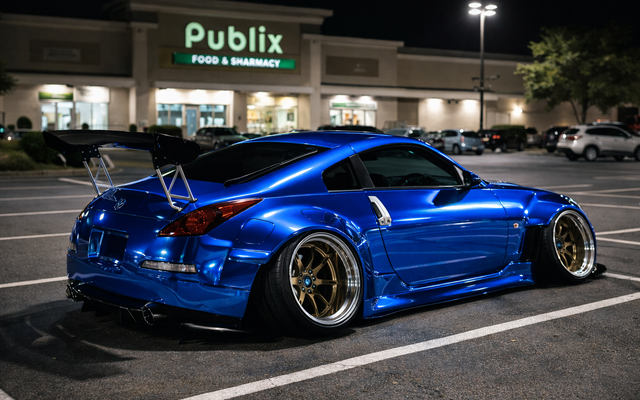
This muscle-derived sports car introduces a particular set of strengths to the drifting sport, including a light aluminium frame, a transaxle-style transaxle that helps create an ideal balance, and the colossal thrust of a large-displacement LS-series V8 engine. This combination makes it an absolute monster on track, able of starting and holding extended drifts with apparently effortless application of throttle. For those desiring remarkable performance per dollar, the Nissan Z33 stands out as a prime choice. It comes from the manufacturer with a stiff platform, a competent OEM LSD, and the smooth V6 motor that offers ample power and torque for practicing and advancing in the discipline. Its successor, the 370Z model, brings additional refinements in body strength, handling precision, and peak engine power, establishing its position as a common pick among competitive drivers. Additional legendary cars that warrant attention include the nimble Wankel-engined FC generation RX-7, the most popular Nissan S13 240SX, the American SN95 generation Mustang, the electronic-equipped E90 3 Series, and the small yet surprisingly playful and instructive Mazda Miata. Each of these chassis offers a unique set of traits, complexities, and potentials, but they all have in common the basic ingredients essential to be transformed into a serious drift car.
However, picking the correct chassis is only the beginning. To access the true potential of any of these cars, significant upgrades to the steering and chassis control systems are absolutely mandatory. This is where the world of precision tuning parts comes into sharp focus. The one most transformative upgrade for a purpose-built drift car is the fitting of a drift-spec angle modification kit. These advanced systems, like those manufactured by performance brands like SLR, are created to significantly increase the car's available lock-to-lock rotation. A factory street car is severely limited in how far its front wheels can turn, a engineering trade-off for public road use. In sliding, conversely, maximum opposite lock is continuously necessary to catch and maintain a angle. An angle kit exchanges the factory uprights, linkages, and potentially A-arms with components that enable the wheels to achieve steering lock over 70 or even 80 degs, versus a normal stock limit of around 40 to 50 degrees.
This tremendously expanded lock offers the operator with significantly greater control during a slide, enabling it to be considerably easier to start a oversteer moment, sustain it through a extended turn, and change smoothly from one direction to another. The improvement in handling is truly profound. Coupled with a appropriately selected angle kit is the equally critical enhancement to the car's spring and damper setup. Store-bought or including high-end sport adjustable suspension are generally not intended for the unique and extreme demands of competitive oversteer. A purpose-built pair of adjustable dampers is crucial. These specialized coilovers have custom valving and spring strength that are tuned for the extreme load shifting that is typical of sliding. When a driver begins a drift, the car's inertia is transferred violently to the outside of the bend. Correct performance dampers manage this movement in a consistent fashion, enabling the chassis to find its balance quickly and providing the driver clear response through the wheel and cockpit. They furthermore enable accurate setting of ground clearance, rebound and compression rate, and weight balance, which are all integral parts of dialing in the car's behavior to a given venue or competition approach. As a system, a top-tier drift angle kit and a properly specified set of competition adjustable dampers constitute the absolute mechanical foundation upon which all subsequent tuning is built.
Once the essential parts is in place, the subsequent essential stage in the build is the precise tuning of the car's wheel angles. This is the world of car suspension tuning, a methodology that can feel overwhelmingly complex to the uninitiated but is, in fact, the secret to transforming a collection of fast pieces into a unified and consistent whole. The most critical parameter of tuning for sliding is definitely negative camber. Camber angle is the tilt of the rim compared to the perfectly straight line when observed from the front of the chassis. When the top edge of the tire is leaning towards the car, this is called negative camber. In sliding, an inward tilt on the front tires is universally employed and is considered necessary. The logic is intrinsically linked to vehicle dynamics.
When a vehicle is cornering at limit angles, coilover setup tips the chassis rolls to the outside of the bend. This body roll forces the outside front wheel to reduce its optimal footprint with the tarmac. By applying inward lean, the tire is pre-leaned to counteract this lean. As the car tilts into the turn, the outside front tire becomes more upright on the road surface, maximizing its bite at the exact point when it is absolutely essential for directional command. Usually, front axle angles for a serious drift car fall between approximately -3 degrees to as extreme as -5 degrees or even more, depending on the specifics of the chassis geometry, rubber choice, and driver feel. The rear wheels also employ inward tilt, but the values are typically more conservative and more nuanced than the front axle. Too much camber at the back can cause the vehicle to excessively loose and challenging to predict on power input, as it reduces the available grip area of the driving tires during straight-line throttle application. Thus, rear axle camber settings are frequently in the ballpark of -1 degree to -3 degrees, striking a delicate equilibrium between providing adequate side grip to assist in starting and holding the drift while still preserving effective grip for exiting the bend. alignment is only one component of the broader tuning equation, which furthermore encompasses toe, caster, and steer correction correction.
Toe refers to the orientation of the tires when viewed from above. Inward toe means the leading edges of the tires are nearer together than the trailing edges, while negative toe means the reverse. For oversteer, a small amount of front negative toe is often used to sharpen the initial directional feel, making the chassis feel more responsive and willing to begin a oversteer moment. Rear axle toe angle is usually set to zero or a extremely small amount of positive toe to encourage straight-line stability under throttle. Caster is the forward or aft inclination of the steering axis when looked at from the side-on of the chassis. Positive positive caster improves steering feel and high-speed stability, and it furthermore adds to inward lean gain during steering, which is highly advantageous. Setting these parameters is a intricate interplay where a modification to one value can and will affect the remaining parameters. The traditional approach for dialing in a vehicle's alignment for drifting has long been a time-consuming endeavor of guesswork and adjustment. A tuner or engineering group would apply a adjustment based on a hunch, drive the vehicle on track, use the operator's individual feel drift angle kits and feedback, and then make another adjustment. This loop would repeat again and again until the car felt "right" or the scheduled practice time ran out. This approach is not just extremely slow in terms of time and costs, but it is furthermore fundamentally imprecise.
Driver sensation is a notoriously inconsistent measurement tool, influenced by numerous elements such as exhaustion, evolving track surfaces, temperature, and simply the mindset of the pilot on that particular session. What feels "loose" on one pass might feel "tight" on the next run, causing confusing feedback and counterproductive tweaks. This age-old limitation in chassis setup is exactly where contemporary technology has intervened to revolutionize the process.
The development and integration of specialized suspension tuning applications has ushered in a radically different paradigm for engineering and refining high-performance sliding vehicles. This new generation of platforms, represented by innovative systems like modern telemetry hardware, work by actively capturing the real-time mechanical behavior of the chassis as it is operated on the track. As opposed to depending on subjective feedback, these systems gather quantifiable data on essential factors such as damper compression and extension, wheel speed, acceleration forces, wheel angle, and throttle and brake drift tuning app position. This acquired data stream is then analyzed by advanced applications that can visualize and interpret the metrics in a actionable format. For the first time, drivers and builders can visualize specifically what the chassis is performing at any given millisecond of a drift. This capability revolutionizes the whole alignment optimization process. Imagine the aforementioned goal of setting the front negative camber for a particular chassis. Rather than introducing a modification from -3 degrees to -3.5 degrees and then running many passes to try and "feel" a difference, a suspension tuning tool can provide instant and irrefutable feedback. The software can indicate in a chart how the suspension's contact patch is behaving during the critical stages of a slide: initiation, mid-corner, and transition. It can demonstrate if the present value is allowing the outside front tire to achieve ideal loading or if the rubber is over-stressed on its outer shoulder.
The tool can then make fact-based suggestions for change. Perhaps the data shows that the outside front tire is even overloading its outer shoulder at -3.5 degrees of negative camber, indicating that even more angle, say -4 degrees, might be warranted. On the other hand, the information might indicate that the tire is failing to coming up to heat or that the inside shoulder is degrading excessively, which could point to that there is excessive negative camber and a modest reduction back to -3.2 degrees would be more optimal. This standard of precision and practical analysis was literally unimaginable in the time of pure seat-of-the-pants adjustment.
The effect of utilizing a dedicated drift telemetry system extends much further than merely setting camber. It serves as an invaluable suspension tuning guide that is tailored to your specific chassis. When adjusting the rebound and compression clickers on your coilovers, instead of using general advice or mimicking another car's numbers, you can use the data to analyze how the vehicle is behaving in relation to your changes. The application can show the damper movement data over a section of track, revealing if the dampers are managing the chassis motion effectively or if they are allowing the car to oscillate too much after a flick. It can aid in pinpointing issues like hitting the bump stops or losing droop, allowing you to apply data-backed adjustments to helper springs, rebound/compression rates, or ride height. This methodology translates equally to the intricate process of suspension geometry optimization. Beyond camber, the system can provide analysis into how modifications to toe settings and caster angle are impacting the car's stability during different parts of a lap. For instance, it can assist you to determine the optimal amount of front axle toe out for your particular steering geometry and competition technique by measuring the speed of turn-in response and the stability of the vehicle at maximum lock. This makes the software an exceptionally effective vehicle dynamics manual that is dynamically calibrated by the real-world performance of your specific vehicle on the track. It elevates the entire project from a subjective skill into a methodical engineering process.
Furthermore, the application of a platform like GripDial is not at all limited to professional teams with extensive budgets. For the club-level enthusiast, it functions as an amazing force multiplier. It in essence gives the builder with the analysis of a professional race engineer without the typical expense. It accelerates the tuning process by giving definitive solutions to questions that would otherwise take countless track days of trial and error to solve. A builder can see how their specific vehicle responds to various settings, developing a deeper knowledge of car control in the journey. It additionally democratizes advanced chassis dynamics techniques, enabling all drivers with the drive to perfect their machine to accomplish it in a systematic and successful way. This is particularly valuable in a discipline like sliding, where engineering expertise has traditionally been a highly secretive asset among top drivers. In the modern era, that knowledge can be in the hands of any motivated driver.
In summary, the journey to building and tuning the ideal high-performance drift machine is a multi-faceted endeavor that smoothly combines proven hardware knowledge with cutting-edge telemetry tools. It starts with the strategic choice of a capable car, followed by the integration of critical performance hardware like high-performance drift angle kits and expertly specified competition coilovers. The journey then progresses into the detailed stage of alignment optimization, where values like camber angle, toe, and caster are precisely set to complement the chassis's new hardware and the operator's personal technique. Finally, and what really distinguishes the modern methodology from the old ways, is the use of a sophisticated drift telemetry software. This platform eliminates the approximation and trial and error of solely feel-based setup by giving empirical, real-time telemetry on how the car is actually functioning. It serves as an indispensable diagnostic aid, a definitive drift suspension tuning guide, and a master chassis development system. In unison, this integrated methodology guarantees that all component of the competition vehicle—from the pick of the platform to the most minute tweak on the suspension—is refined for peak competitiveness on the circuit. It represents the complete maturation of the discipline of drifting, merging mechanical driving skill with surgical vehicle setup to forge the perfect dominant vehicles attainable.